Google Analytics is a powerful tool that tracks and analyzes website traffic for informed marketing decisions.
Service URL: policies.google.com (opens in a new window)
_gac_
Contains information related to marketing campaigns of the user. These are shared with Google AdWords / Google Ads when the Google Ads and Google Analytics accounts are linked together.
90 days
__utma
ID used to identify users and sessions
2 years after last activity
__utmt
Used to monitor number of Google Analytics server requests
10 minutes
__utmb
Used to distinguish new sessions and visits. This cookie is set when the GA.js javascript library is loaded and there is no existing __utmb cookie. The cookie is updated every time data is sent to the Google Analytics server.
30 minutes after last activity
__utmc
Used only with old Urchin versions of Google Analytics and not with GA.js. Was used to distinguish between new sessions and visits at the end of a session.
End of session (browser)
__utmz
Contains information about the traffic source or campaign that directed user to the website. The cookie is set when the GA.js javascript is loaded and updated when data is sent to the Google Anaytics server
6 months after last activity
__utmv
Contains custom information set by the web developer via the _setCustomVar method in Google Analytics. This cookie is updated every time new data is sent to the Google Analytics server.
2 years after last activity
__utmx
Used to determine whether a user is included in an A / B or Multivariate test.
18 months
_ga
ID used to identify users
2 years
_gali
Used by Google Analytics to determine which links on a page are being clicked
30 seconds
_ga_
ID used to identify users
2 years
_gid
ID used to identify users for 24 hours after last activity
24 hours
_gat
Used to monitor number of Google Analytics server requests when using Google Tag Manager
1 minute


Comments
11 responses to “Weekly Wine Quiz: Going Stag?”
True
that's why my garden looks like hell this year–they were all out of Stag Bladders at Whole Foods….
Masi – did you try Wegmans? Maybe near the truffles? ;-)
True? …Weird either way!
Dusty – Yeah, the BioD thing is definitely… not intuitive! I did a whole host of coverage on it a little over a year ago, worth checking out if you want to go down the rabbit hole. :) Cheers!
The Spirit World tells me that the answer is True.
Richard – Ah, the old quasi-religious BoD debate! Or do you mean something like a bottle of vodka spoke to you and told you that? :)
Is Steiner could speak to the Spirit World and come up with BioD, then I can surely do the same to answer a trivia question. Though maybe it was the vodka speaking to both me and Steiner. :)
Richard – ha! :)
What if Mr Yarrow wanted to use the flower heads, though?
Anyway, this does sound quite odd and vaguely mystical in its specificity to me, as some other biodynamic practices do, so I'm tilting towards True, despite it sounding a little too over-the-top.
While different plants can contain all sorts of different chemical compounds, and the enzymes and chemical compounds in different organs of different animals can also vary wildly, how do biodynamic growers decide that particular combinations work and others don't? Would substituting the bladder of a doe work in a pinch? What about a bull? If you don't have any yarrow at the moment, will nettles work?
Can you recommend any books on biodynamicism? I would like a greater understanding of how it works.
MyrddinGwin – I've yet to find anything that can come close to reasonably explaining those aspects of BioD. You can start with some of the coverage here, might help at least point you in more detailed directions: https://www.1winedude.com/index.php/2011/02/01/the… Cheers!
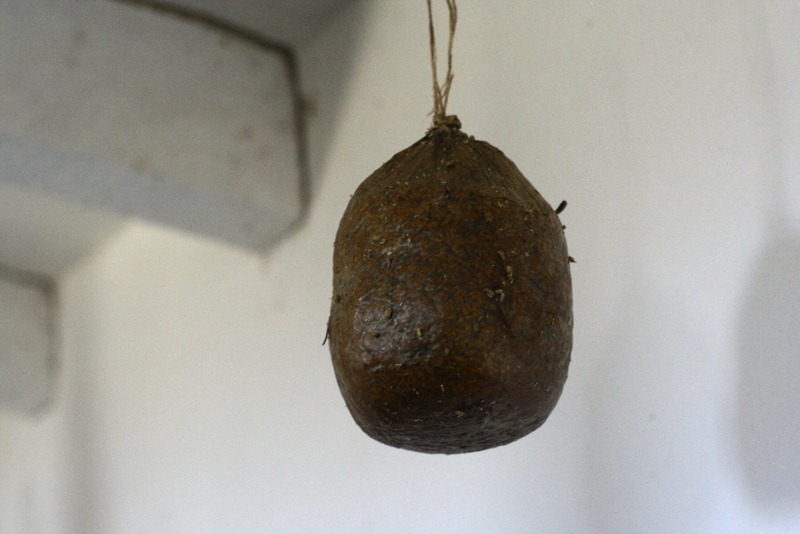
There's no fooling anyone this week! Here's The Official Wine Quiz Answer:
A. True
Believe it or not, Biodynamic farm preparations do, indeed, include flower heads of yarrow fermented in a stag's bladder (it's known as Preparation #502). It's meant to be applied to vineyard compost along with other preparations that include ingredients such as chamomile, nettle tea, oak barks and dandelion heads (the latter fermented in cow intestine).
Cheers!